
Binoculars are an essential tool for any avid birdwatcher. They allow you to get up close and personal with your feathered friends, observe their behavior, and identify species that may be too far away to see with the naked eye. But with so many options on the market, choosing the right binoculars can be a daunting task. In this article, we will show you the selection process and provide you with a list of the best binoculars for bird watching. Whether you are a seasoned birder or just starting out, this article will help you make an informed decision and provide you with the perfect companion for your birding adventures.
What to Keep in Mind
Your Budget
When buying binoculars, it’s important to set a realistic budget. It’s possible to find a good pair of binoculars for as little as $100, but prices can run into the thousands, so think carefully about how much you’re willing to spend.
Performance and conditions
Consider what you’ll be using your binoculars for and in what conditions (time of day, weather, etc.). This will help you determine the performance features you need. For example, if you’re birdwatching in low-light conditions, look for binoculars with a larger objective lens and higher magnification for better light-gathering capabilities.
Comfort and ease of use
Binoculars need to be comfortable to hold and the focus wheel should be easy to reach and turn. You don’t want to strain your eyes or struggle to adjust the focus, as this will discourage regular use. Make sure you can look through the binoculars without discomfort or fatigue.
Weight and portability
If you’ll be hiking a lot or carrying your binoculars for long periods of time, weight and portability should be a consideration. Lighter, more compact models may be preferable to heavier, bulkier ones.
Durability
Binoculars need to be able to withstand the elements, such as rain, fog, and dust. Look for models that are waterproof, fogproof, and have a durable rubberized body.
Optical quality
The quality of the optics is crucial for a clear, bright, and high-contrast image. Features such as fully multi-coated lenses, phase-corrected prisms, and ED (extra-low dispersion) glass can all contribute to improved optical performance.
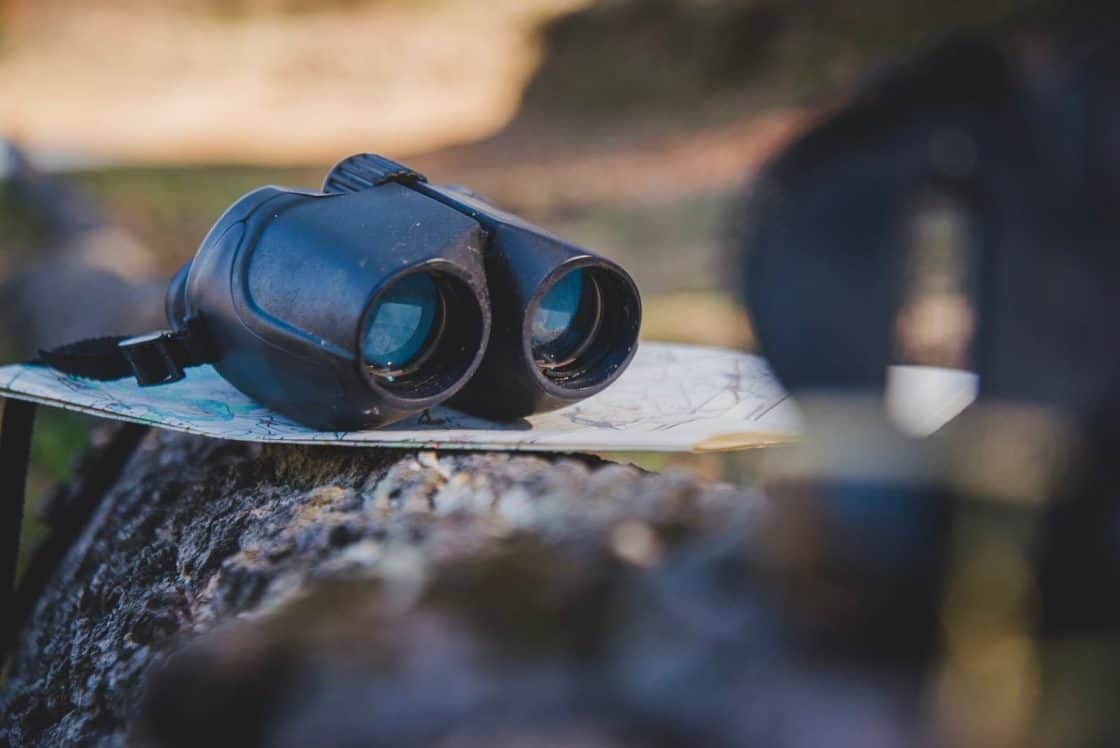
What Magnification Do You Need?
The magnification of binoculars is typically expressed as a ratio, such as 8×42 or 10×50. The first number represents the magnification power, and the second number refers to the diameter of the objective lens in millimeters.
8x Magnification
8x magnification is a popular and versatile choice for birdwatching. It offers a good balance between magnification and field of view, making it easy to locate and track birds without losing too much of the surrounding context.
10x Magnification
10x magnification provides a closer, more detailed view of birds, but the field of view is narrower, and the image may be slightly shakier, especially if you don’t have a tripod. This can make it more challenging to locate and follow birds in flight.
Choosing the Right Magnification
The best magnification for you will depend on your personal preferences and the types of birds you’ll be observing. If you’re primarily interested in identifying and observing birds at a distance, a higher magnification like 10x may be preferable. However, if you want to maintain a wider field of view and have an easier time locating and tracking birds, an 8x or even 7x magnification may be a better choice.
It’s worth noting that higher magnification doesn’t necessarily mean better performance. Binoculars with a higher magnification (e.g., 12x or 16x) can be more difficult to hold steady, resulting in a shakier image. For most birdwatchers, 8x or 10x is an excellent compromise between magnification and usability.
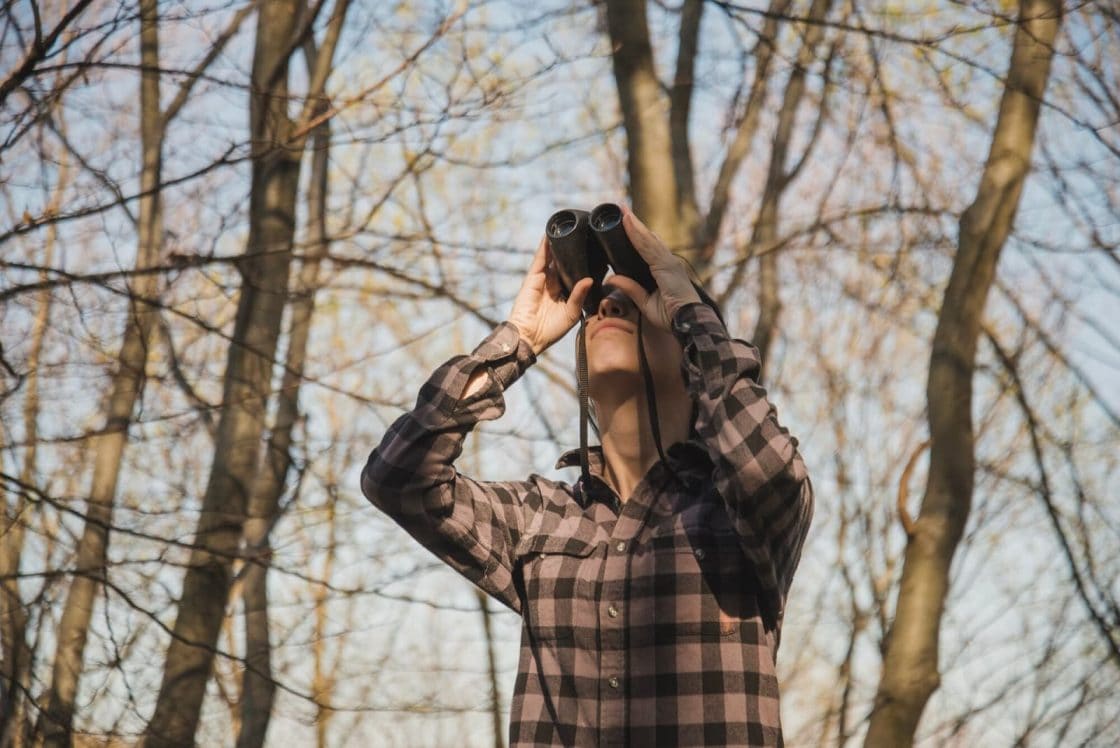
What Performance Do You Need?
Objective Lens Size
The objective lens size, or the diameter of the larger front lenses, is an important factor in determining the performance of your binoculars. A larger objective lens (e.g., 50mm) will gather more light, resulting in a brighter image, especially in low-light conditions. However, larger lenses also make the binoculars heavier and bulkier.
A good compromise for birdwatching is a 42mm objective lens, which offers a balance between light-gathering capability and portability.
Field of View
The field of view (FOV) refers to the width of the area you can see through the binoculars. A wider field of view can make it easier to locate and track birds, especially those in flight. The FOV is typically measured in feet at a distance of 1,000 yards.
Look for binoculars with a field of view of at least 300 feet at 1,000 yards for optimal birdwatching. Wider fields of view in the 350-400 feet range can be particularly helpful for scanning large areas or following fast-moving birds.
Eye Relief
Eye relief is the distance between the eyepiece and your eye that allows you to see the full field of view comfortably. If you wear glasses, you’ll want binoculars with a longer eye relief (around 15-18mm) to ensure you can still use the binoculars with your glasses on.
Coatings and Prisms
The quality of the coatings and prisms used in the binoculars can have a significant impact on the image quality and brightness. Look for features like:
- Fully multi-coated lenses: This helps to reduce glare and improve light transmission for a brighter, clearer image;
- Phase-corrected prisms: This helps to improve contrast and resolution;
- Roof prisms: These are generally more compact and durable than the traditional porro prism design.
Figures and Specs
When delving into the realm of binoculars, you’re frequently confronted with an array of numerical values and technical jargon that can befuddle even the most astute shopper.
Amplification and Objective Lens Dimensions
As previously indicated, the dual-number specification, like 8×42 or 10×50, denotes the amplification and the size of the objective lens, respectively. The first figure represents the amplification, while the second signifies the diameter of the objective lenses in millimeters.
Field of Vision (FOV)
The field of vision is typically articulated in feet at a distance of 1,000 yards. A broader field of vision (e.g., 400 feet) is generally preferred for activities like birdwatching, as it affords a more extensive view of the surrounding landscape.
Exit Pupil
The exit pupil refers to the diameter of the light beam exiting the eyepiece and entering your eye. It’s computed by dividing the diameter of the objective lens by the amplification. A larger exit pupil (e.g., 5mm) excels in low-light conditions, facilitating more light to reach your eyes.
Relative Luminance
Relative luminance gauges the amount of light the binoculars can collect and convey to your eyes. It’s determined by squaring the diameter of the exit pupil. Binoculars boasting higher relative luminance tend to excel in dimly lit environments.
Eye Relief
Eye relief denotes the distance between the eyepiece and your eye at which you can perceive the entire field of vision. As previously mentioned, this aspect is particularly critical for eyeglass wearers.
Prism Variation
Binoculars utilize either roof prisms or porro prisms. Roof prisms are generally lauded for their compactness and durability, whereas porro prisms typically offer a broader field of vision and enhanced depth perception.
Best Binoculars For Bird Watching
1. Celestron Nature DX 10×42
- Most recently tested March 2024;
- Size and weight 13.5 x 12.6 x 5.2cm (HxWxD); 629g;
- Type Roof prism;
- Magnification x objective lens diameter 10x42mm;
- Close focusing distance 2 meters;
- Field of view at 1,000 meters 101 meters;
- Eye relief 14mm.
Price: $169.99
2. Leica 10×42 Trinovid HD
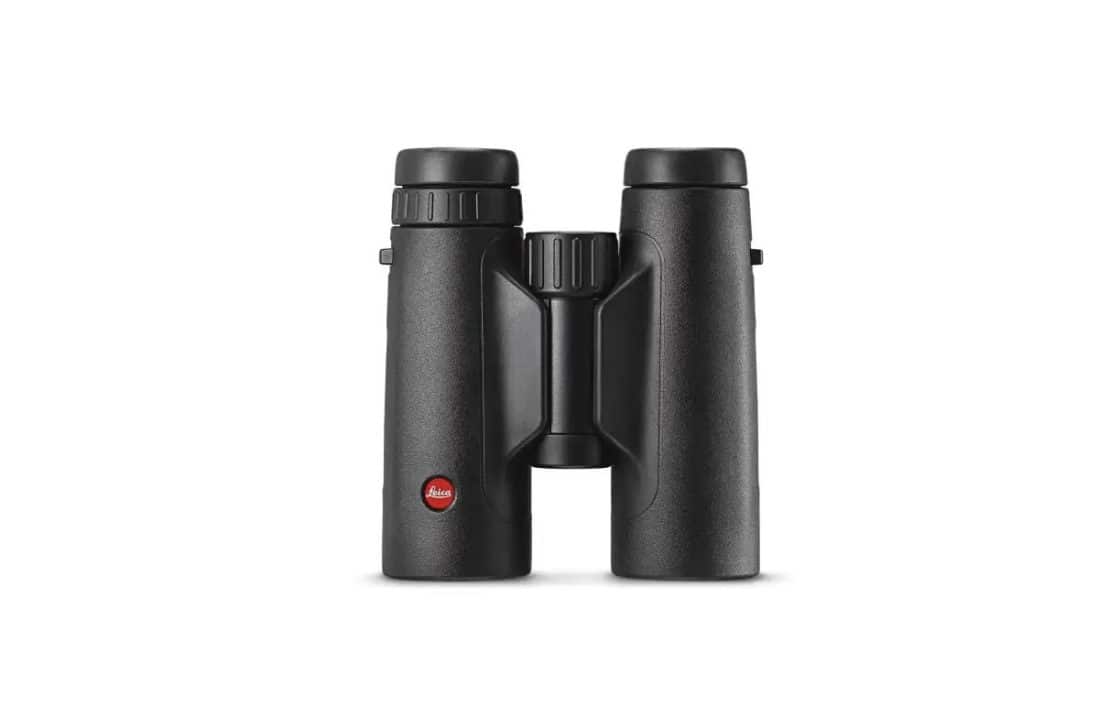
- Most recently tested March 2024;
- Size and weight 14 x 11.7 x 6.5cm (HxWxD); 730g;
- Type Roof prism;
- Magnification x objective lens diameter 10x42mm;
- Close focusing distance 1.6 meters;
- Field of view at 1,000 meters 113 meters;
- Eye relief 15mm.
Price: $999.00
3. Nikon Prostaff P3 10×42
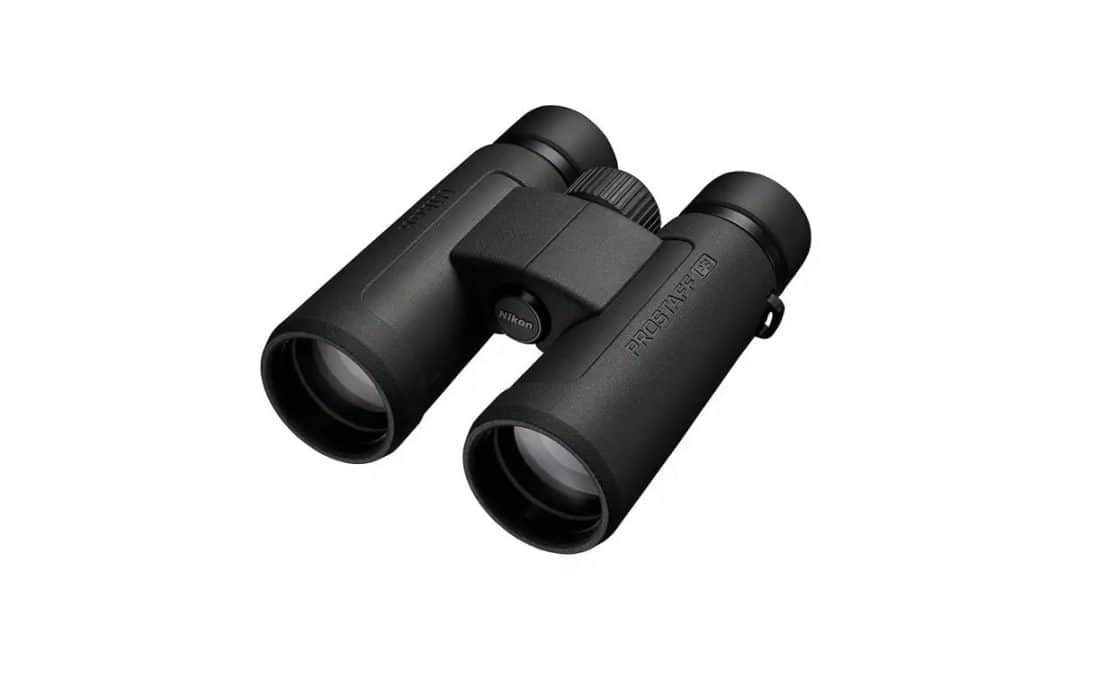
- Most recently tested March 2024;
- Size and weight 15 x 13 x 5.4cm (HxWxD); 585g;
- Type Roof prism;
- Magnification x objective lens diameter 10x42mm;
- Close focusing distance 3 meters;
- Field of view at 1,000 meters 122 meters;
- Eye relief 15.7mm.
Price: $129.95
4. Opticron Verano BGA VHD 10×42
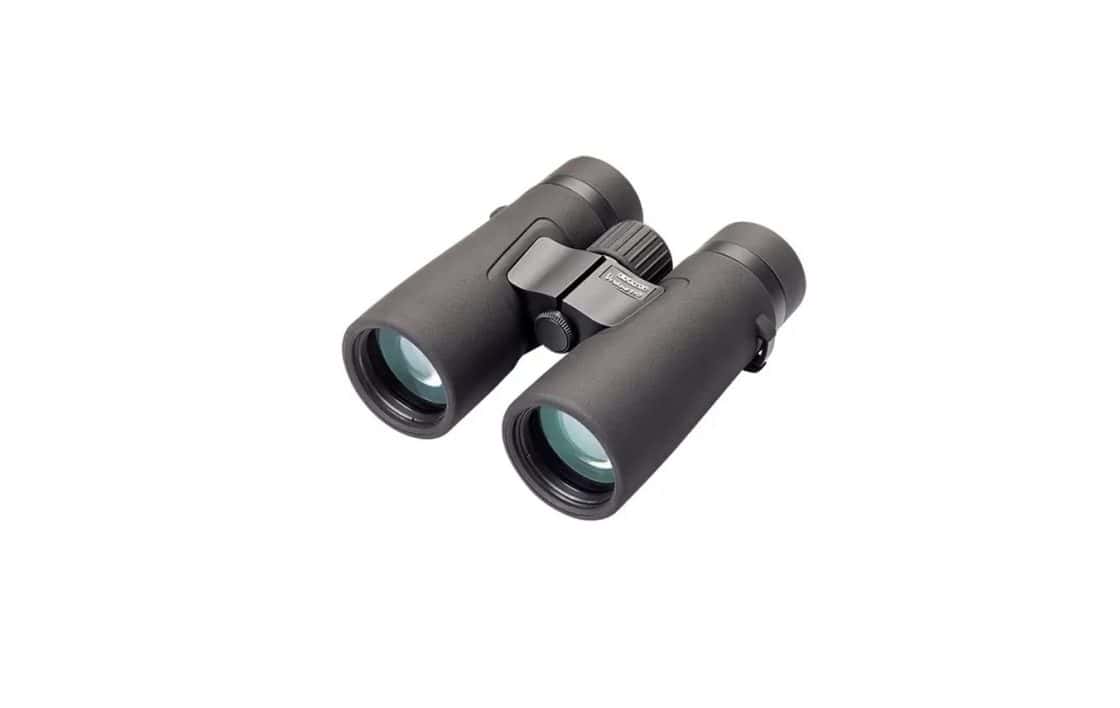
- Most recently tested March 2024;
- Size and weight 14 x 13.4 x 5.5cm (HxWxD); 652g;
- Type Roof prism;
- Magnification x objective lens diameter 10x42mm;
- Close focusing distance 1.3 meters;
- Field of view at 1,000 meters 109 meters;
- Eye relief 18mm.
Price: $525.49
Conclusion
Choosing the best binoculars for birdwatching can be a daunting task, but by considering the key factors we’ve outlined in this article, you’ll be well on your way to finding the perfect pair. Remember to set a realistic budget, think about the performance and conditions you’ll be using them in, and don’t forget to try them out before making your purchase.